How to get picked by brands: the qualities that grow a creator business
Talent gets you noticed, but how you communicate gets you hired. 43% of decision-makers ignore messages that feel impersonal: here is how to stand out.
The essentials in 30 seconds
- Brands don't only buy reach. They choose people they trust to deliver on time, on brief, without friction.
- Generic, automated messages are the fastest way to get ignored. One personal sentence beats ten copy-pasted paragraphs.
- Reactivity is a skill. A quick, clear reply often matters more than a perfect one sent four days later.
- Your profile data is your shop window. Every criterion a brand can filter on is there for a reason: if a field is empty, you may simply not show up.
- Professional habits compound: one smooth collaboration leads to the next one.
Why "being good" is not enough
Many creators think the selection comes down to numbers: followers, views, engagement rate. Those matter, but they only get you on the shortlist. What gets you the deal is what happens next: the first message, the reply, the brief, the delivery.
Think about it from the brand's side. A marketing manager often compares several creators with similar audiences. When the profiles look alike, the decision is made on simple questions: Who answered clearly? Who understood what we do? Who will be easy to work with?
In other words, audiences care about fit, and so do brands. Your job is to make that fit obvious, and to make working with you feel easy.
Quality #1: messages that sound like you, written for them
The problem with automated messages
Automated tools can save time, but badly used, they cost you deals. Brand teams receive a lot of pitches, and they recognize the copy-paste ones instantly:
- "Dear Sir/Madam" or, worse, the wrong brand name;
- a long template that could be sent to any company;
- a merge field that didn't work ("Hi {first_name}");
- a media kit attached with no explanation of why this brand, why now.
These details tell the brand one thing: you didn't take the time to look at us.
This survey covers business emails in general, not only creator pitches, but the lesson applies directly: relevance and a personal touch decide whether you get an answer.
What a good message looks like
A good first message is short and specific. Aim for five to eight lines:
- Who you are, in one sentence (your niche and your audience).
- Why this brand: a product you actually use, a recent campaign you liked, a link with your content.
- A concrete idea: a format, an angle, a content series.
- Proof: one or two relevant examples of past work, not your whole portfolio.
- A simple next step: "Would you be open to a quick call next week?"
Before you hit send, check the brand name, the contact's name and the links. It takes thirty seconds and avoids the mistakes that end a conversation before it starts.
Tone: professional, not robotic
You don't need to sound like a corporate press release. Brands work with you because of your personality. Stay warm and natural, but clear: short sentences, no slang overload, no wall of emojis. And if you use AI to help you write, always reread and rewrite. It should sound like you, not like a template.
Quality #2: reactivity
Why response time matters so much
Campaigns run on tight schedules. When a brand reaches out, it is often building a shortlist for a launch date. If you reply four days later, the list may already be closed, even if you were the best fit.
Slow replies also send a signal: if it takes days to answer a first message, how will the brief, the revisions and the deadlines go?
Simple habits that make a difference
- Reply within 24 hours on working days, even if you don't have all the answers yet. "Thanks, I'm interested, I'll send you my availability and rates tomorrow" is a perfect reply.
- Turn on notifications for the platforms where brands contact you, and check them at fixed times each day.
- Prepare your answers in advance: a short rate sheet, your availability for the coming weeks, your usage rights conditions. You will reply faster and more consistently.
- Say no quickly and politely when a collaboration isn't right for you. A clear "not this time" keeps the door open for the next campaign; silence closes it.
- Set an out-of-office message when you are away, with your return date.
Follow up, don't chase
If a brand hasn't answered your proposal, one or two polite follow-ups are fine. Space them out by a few days, add something new each time (an idea, a recent result), and stop there. Persistence is good; pressure isn't.
Quality #3: complete and accurate profile data
This is the part creators underestimate most. On a platform like kstr, brands search for creators using filters: niche, location, audience, platforms, formats, languages, rates, availability and more. Every one of these criteria is there because brands use it to choose. None of them is decorative.
What this means in practice:
- An empty field can make you invisible. If a brand filters on a city, a language or a content format and that information is missing from your profile, you may never appear in the results, however good your content is.
- Outdated data costs you trust. Old audience figures, a niche you no longer cover or rates that changed: if the brand discovers the gap during the conversation, the deal often stops there.
- Precise data attracts the right offers. The more accurate your profile, the more relevant the requests you receive, and the less time you waste on collaborations that don't fit.
A quick profile checklist
- Every field is filled in, including the ones that seem minor.
- Your audience data (location, age range, platforms) is up to date.
- Your niche and content formats reflect what you actually post today.
- Your rates and availability are current.
- Your best and most recent work is showcased first.
- Your bio says, in one or two sentences, who you are and what you bring to a brand.
Set a reminder to review your profile once a month. It takes ten minutes and it directly affects how many brands can find you.
Quality #4: reliability from brief to report
Getting picked once is good. Getting picked again is how you build a business. Brands come back to the creators who made their life easy:
- Read the brief fully and ask your questions at the start, not the day before publication.
- Respect deadlines. If something slips, warn the brand early and suggest a new date.
- Respect the legal rules: clearly disclose every paid partnership, as required in France and across Europe.
- Share your results after the campaign without waiting to be asked: reach, views, engagement, a few screenshots and what you learned.
- Say thank you. A short message at the end of a collaboration leaves a strong last impression.
Our take
The creator market is getting more professional, and brands now compare creators on more than numbers. The good news: the qualities that make the difference don't depend on the size of your audience. Personal messages, quick replies, a complete profile and reliable delivery are within reach of every creator, from a few thousand followers to a few million.
Treat your creator activity like a business, and brands will treat you like a partner.
Sources
- The 2026 Influencer Marketing Report, Sprout Social (survey of 2,250 consumers in the US, UK and Australia)
- The State of Cold Email 2025, Hunter (survey of 217 B2B decision-makers and analysis of 11 million cold emails sent in 2024)
kstr met en relation les marques avec des créateurs de contenu vérifiés : contrat signé en ligne, paiement sécurisé versé une fois le contenu validé.
À lire aussi
Le brief parfait : le modèle en 8 rubriques pour obtenir le contenu que vous voulez
Un bon contenu commence par un bon brief. Objectif, message, livrables, mention publicitaire, droits d'usage : le modèle en 8 rubriques pour cadrer u…
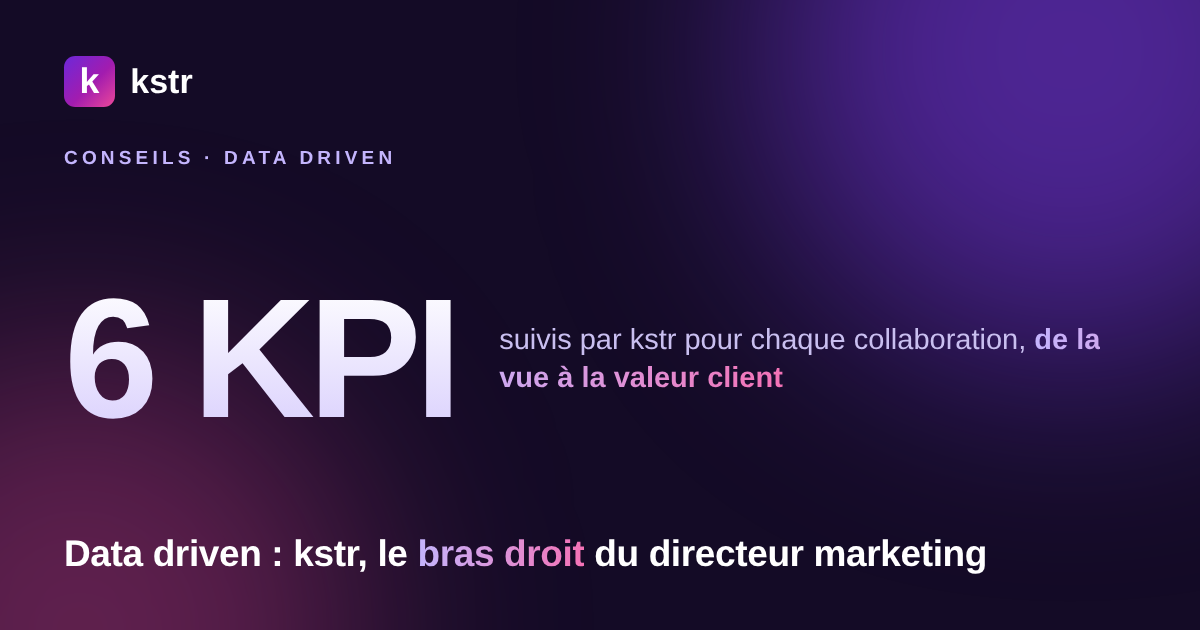
Data driven : kstr, le bras droit du directeur marketing pour piloter l'influence
CPM, CPC, taux de conversion, CPA, ROAS, valeur vie client : kstr mesure la performance de chaque collaboration, via les API des réseaux sociaux ou l…
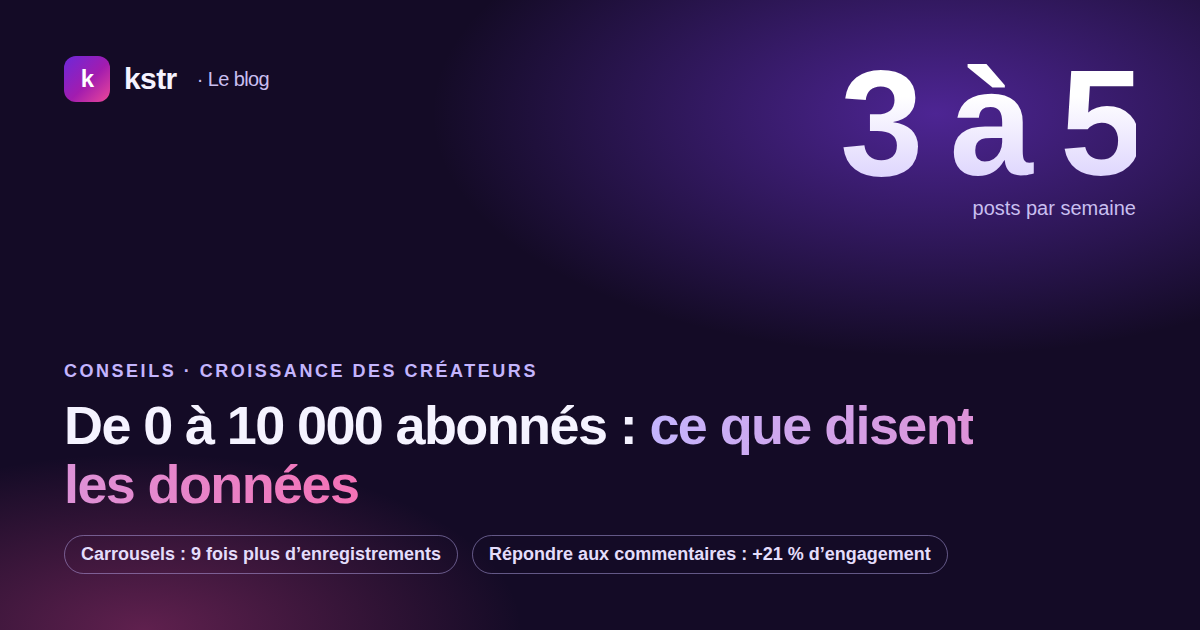
De 0 à 10 000 abonnés : ce que disent vraiment les données sur la croissance des créateurs
Fréquence, formats, accroches, collaborations, horaires : ce que montrent des études portant sur des millions de publications pour faire grandir un c…